
Industrial Heat Exchangers
CAPABILITIES
Heat exchangers engineered, fabricated and serviced for the applications where failure is not an option.
Alliance Fabricating designs, fabricates, repairs and services industrial heat exchangers for demanding process environments across North America.
From new shell-and-tube exchangers to replacement bundles, retubes and emergency repairs, our engineers and fabricators work as one team to solve the entire problem—not simply build to a drawing.
When operating conditions are difficult, metallurgy is complex, or an unplanned failure puts production at risk, Alliance brings the engineering depth, manufacturing capability and speed to get critical equipment back where it belongs: in service.
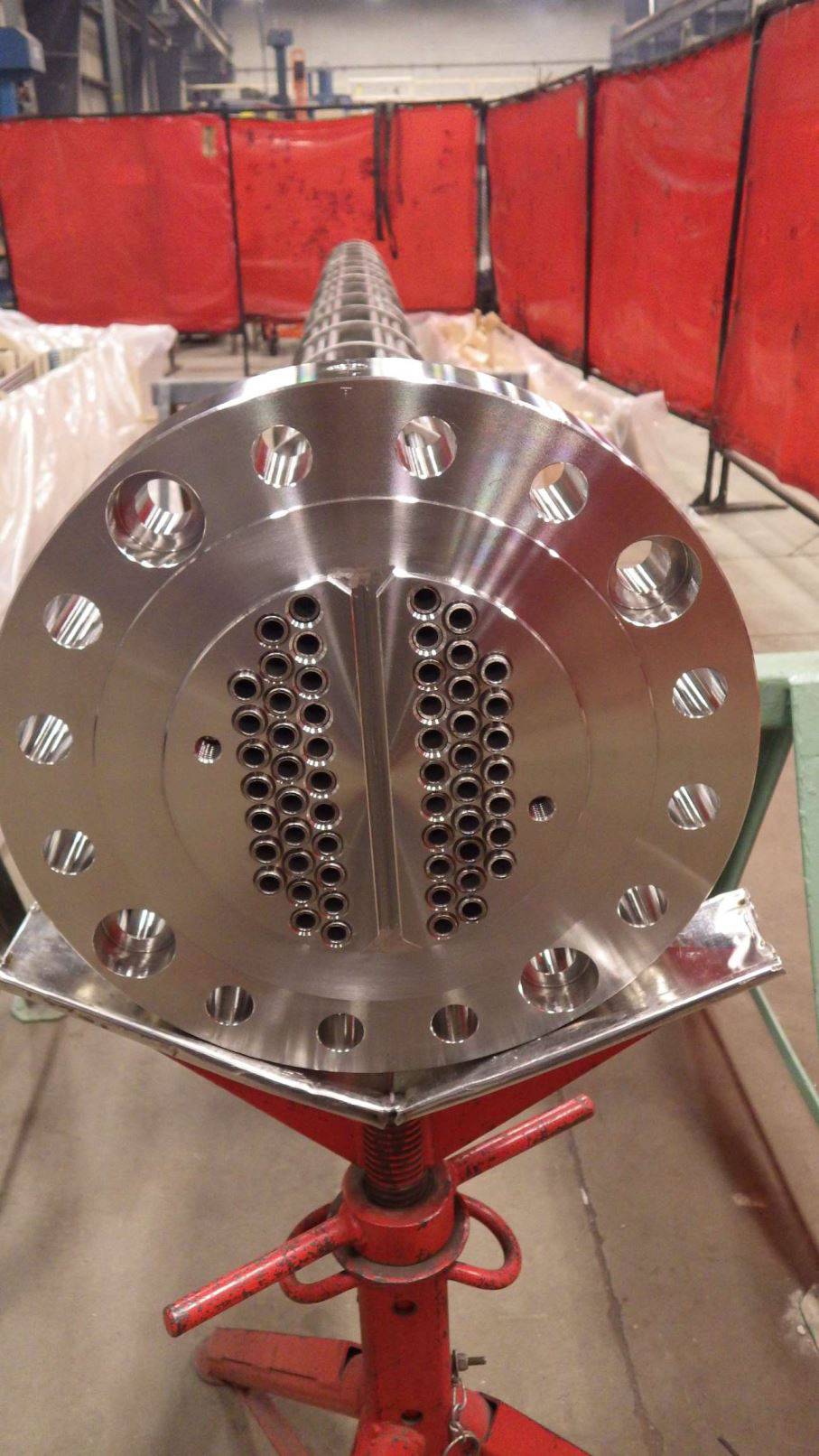
Engineering and manufacturing under one roof.
Our Sarnia, Ontario facility brings engineering, machining, welding, fabrication, assembly, inspection and testing together within one operation. That integration gives our team greater control over quality, communication and schedule—particularly when exchanger geometry, materials or delivery requirements are difficult.
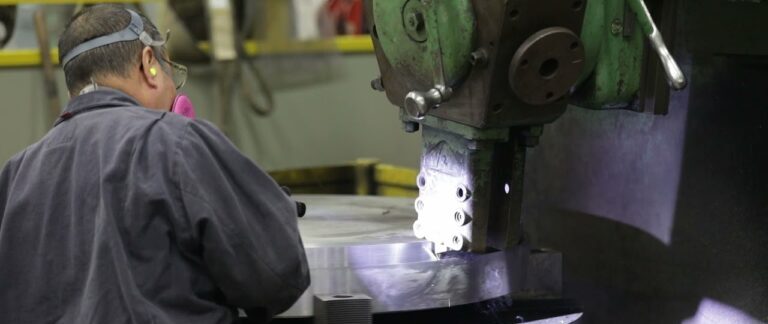
Heat Exchanger Capabilities

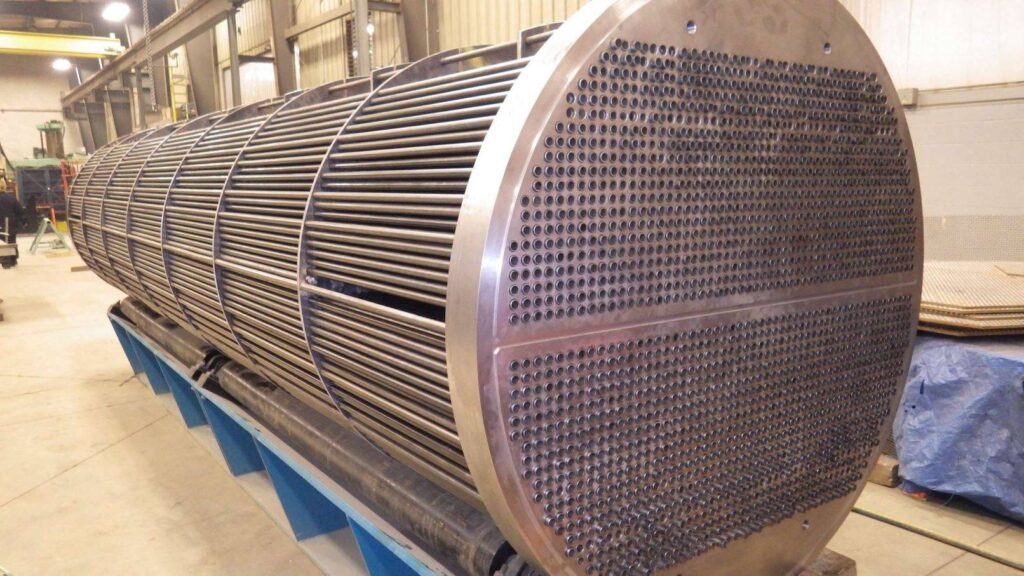
Shell-and-Tube Heat Exchangers
Custom engineered and fabricated for process heating, cooling, condensing, vaporizing and heat-recovery applications.
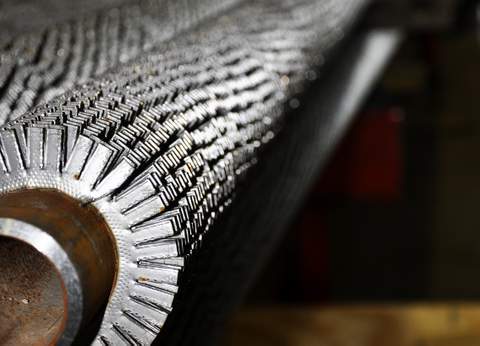
Hairpin Heat Exchangers
Compact exchanger configurations engineered for high-pressure, high-temperature and specialized process duties.
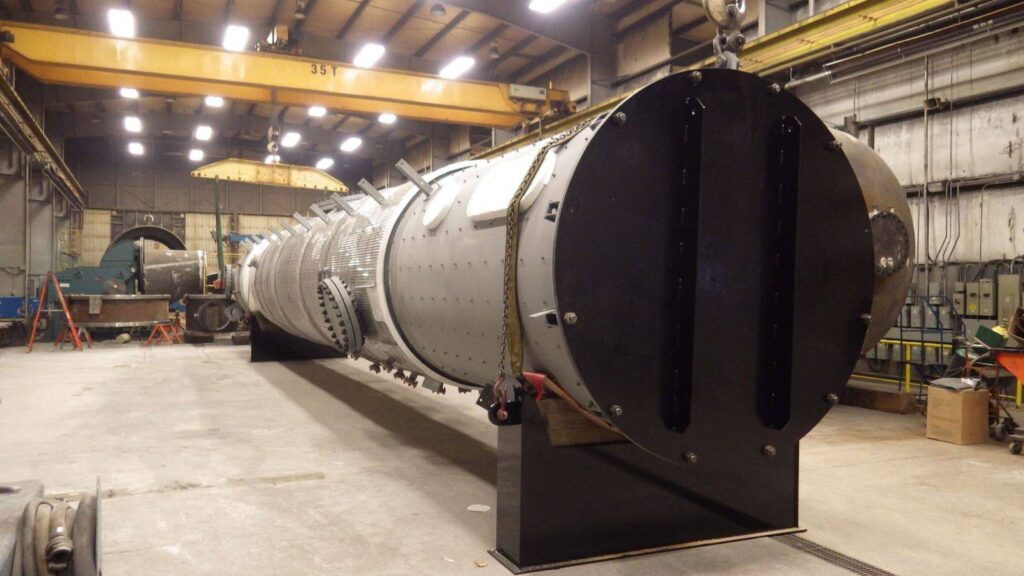
Helixchanger® Heat Exchangers
Licensed Helixchanger® fabrication for applications requiring specialized shell-side flow and thermal performance.
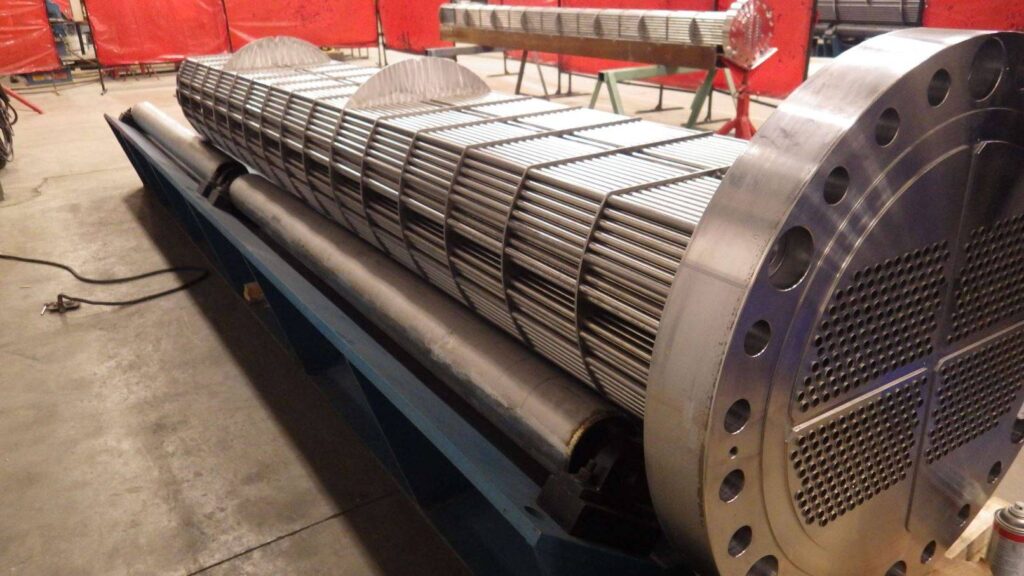
Replacement Tube Bundles
Replacement and redesigned bundles manufactured for existing exchanger shells, including obsolete or difficult-to-source equipment.
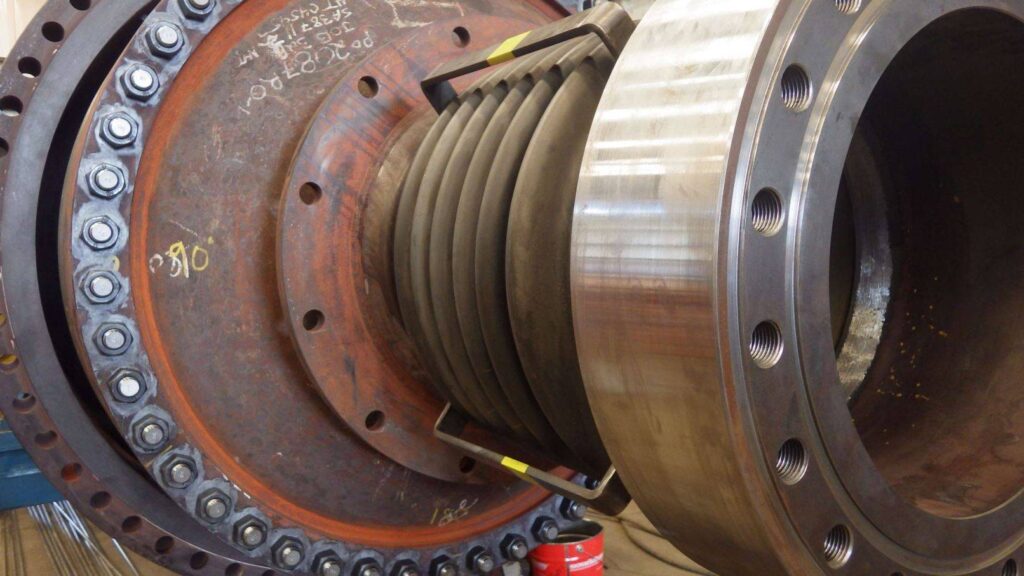
Heat Exchanger Components
Fabrication and machining of channels, floating heads, tubesheets, shells, bonnets and other exchanger components.
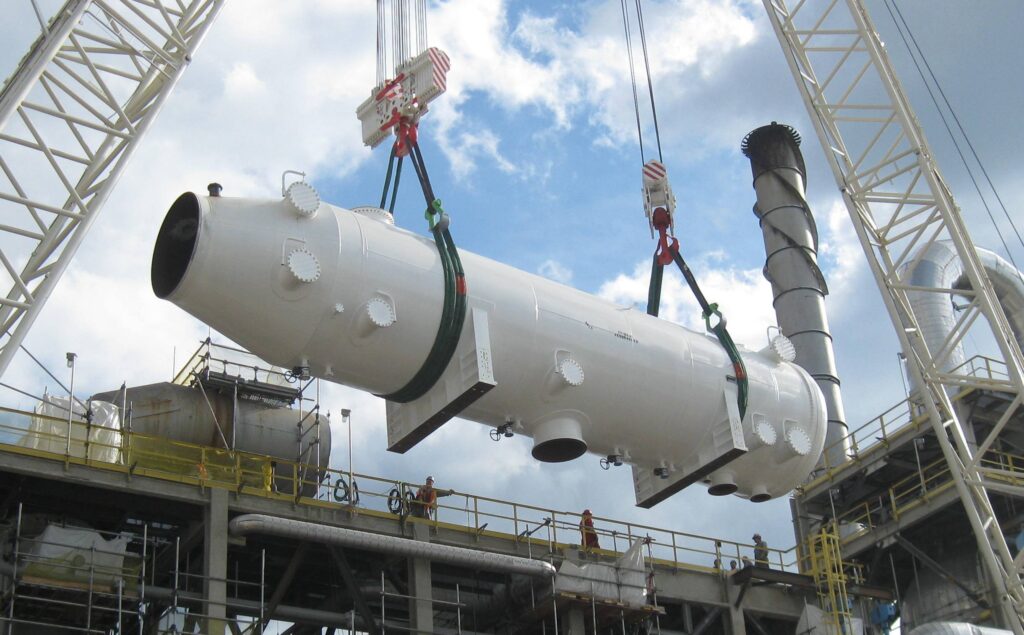
Custom and Complex Exchangers
Engineered equipment for applications that fall outside routine exchanger fabrication including difficult metallurgy, unusual dimensions, demanding process conditions and customer-specific requirements.
Expertise in material selection & metallurgy for corrosive and demanding process conditions
Heat exchanger reliability depends as much on material selection and welding expertise as it does on thermal design. Alliance has deep experience fabricating pressure equipment in conventional and difficult metallurgies for corrosive, high-temperature and high-pressure applications.
- Carbon steels
- Stainless steels
- Chrome-moly and low-alloy steels
- High-nickel alloys
- Corrosion-resistant alloys
- Clad construction
- Weld-overlay construction
- Other specialty and application-specific materials
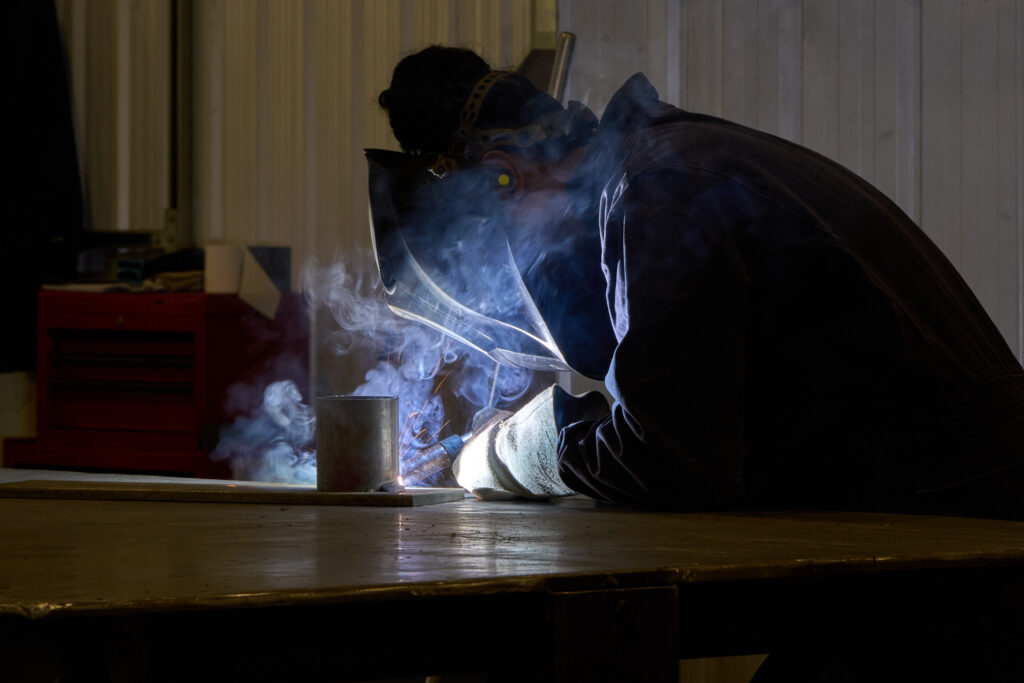
Heat Exchanger Repair, Retubing and Life Extension
Not every exchanger problem requires a new exchanger.
For operating plants, the most valuable solution is often the one that safely restores performance with the least disruption to production. Alliance supports existing industrial heat exchangers through inspection, repair, alteration, component replacement and life-extension work.
Services include:
- Heat exchanger retubing
- Tube bundle replacement
- Replacement tubesheets
- Channel and floating-head repair or replacement
- Shell repairs
- Machining
- Weld repair
- Weld overlay
- Code repairs and alterations
- Inspection and testing
- Fitness-for-service support
- Replacement components
- Existing-equipment modifications
Our team evaluates the condition of the equipment, the operating requirements and the available outage window before recommending the appropriate repair, modification or replacement strategy.
CASE STUDY 1421
Joint Redesign to Improve Repeatable Quality Across 3,000+ Welds
Alliance Fabricating was contracted to manufacture four shutdown cooling heat exchangers for a nuclear power facility, a project involving more than 3,000 tube-to-tubesheet welds. The application required automated orbital welding of 5/8-inch diameter, thin-wall 304L stainless-steel tubing to a 12.5-inch-thick forged steel tubesheet with a stainless-steel corrosion-resistant weld overlay. The combination of thin tubing, dissimilar material construction, stringent nuclear quality requirements, and the sheer number of welds left little tolerance for inconsistency. Each weld had to meet demanding requirements for fusion, weld geometry, and leak-tight integrity, with a process capable of delivering those results thousands of times.
The initial welding procedure successfully qualified to ASME Section IX, producing acceptable welds on the qualification mock-up. However, when the same procedure was applied to a production-representative assembly, weld quality deteriorated significantly. The second welding pass produced unstable weld pools, poor toe wetting, irregular profiles, porosity, and localized burn-through. Attempts to repeat acceptable welds consistently were unsuccessful, with some trials producing only two or three acceptable welds in succession.
For a manufacturer, this presented a difficult technical problem. We were faced with a code-qualified automated process that performed reliably under qualification conditions but could not maintain that performance on the specified production materials. With more than 3,000 welds required for safety-critical equipment, high repair rates and unpredictable weld quality were not viable production conditions.
Investigating the Source of Weld Inconsistency
Before making changes to the approved joint design, Alliance undertook a detailed investigation of the welding process, materials, equipment, and assembly conditions. The work involved welding specialists, fabrication personnel, engineering and quality teams, as well as technical support from the welding equipment manufacturer and the customer.
Multiple production-representative test assemblies were prepared to isolate variables and evaluate potential causes. Some adjustments improved individual welds, but none initially produced the consistency required for full-scale manufacturing.
1
Confirming the Difference Between Qualification and Production
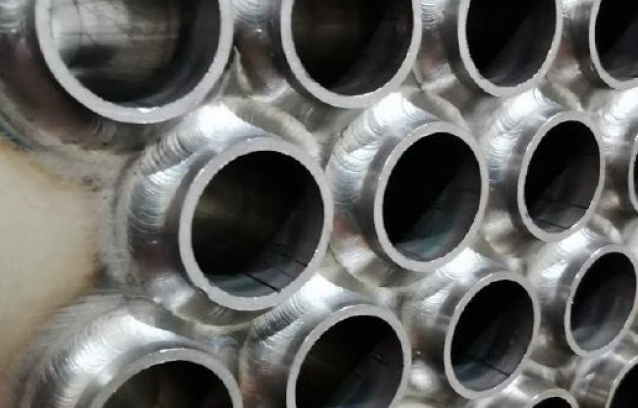
Alliance first verified that the approved welding procedure continued to perform successfully on the original qualification materials. It did. However, when applied to the full-thickness, weld-overlaid tubesheet assembly, the second welding pass produced unstable weld pools, incomplete toe wetting, irregular weld profiles, and localized burn-through.
This established an important distinction: the welding program remained capable of producing acceptable welds, but its performance was not consistent under the production-representative conditions.
2
Evaluating Materials, Fit-Up, and Process Variables
The investigation extended beyond the welding program itself. Alliance reviewed weld overlay chemistry and hardness, residual magnetism, surface cleanliness, tube and hole dimensions, clamping, and tack expansion methods.
Tube expansion was a particular concern. Changes to expansion depth and location occasionally produced acceptable welds, but the improvements were inconsistent. Even with careful dimensional control and clean welding surfaces, the process continued to exhibit defects.
|
Variable Investigated |
Finding |
|
Overlay chemistry and hardness |
No conclusive cause established |
|
Residual magnetism |
Readings of 0–8 gauss |
|
Tube and hole dimensions |
Checked; non-concentric tubes rejected |
|
Tack expansion |
Localized improvements, not sustained |
|
Welding parameters |
Partial improvement without repeatability |
3
Testing Equipment and Welding Process Adjustments
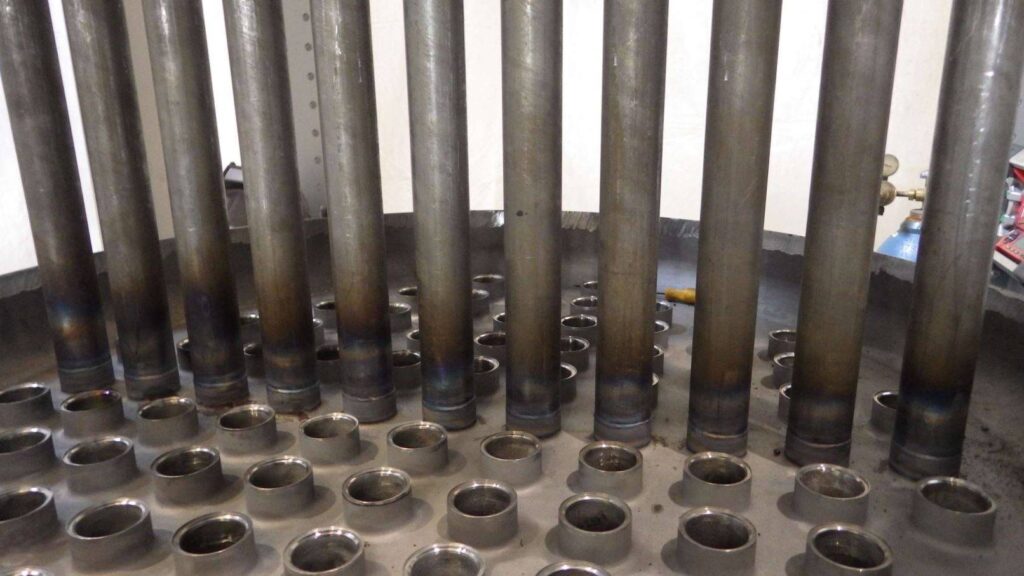
Alliance worked directly with the welding equipment manufacturer and the customer’s technical team to evaluate changes to torch positioning, tungsten geometry, filler wire delivery, welding current, and equipment clamping.
Trials included revised welding programs, changes to heat input, and alternative tube expansion methods. Several configurations produced short runs of acceptable welds, but maintaining consistent fusion and weld geometry remained difficult. Improvements in one aspect of the weld sometimes introduced defects elsewhere.
4
Assessing Repeatability Across Representative Test Assemblies
Testing expanded to larger mock-ups and additional welding trials, including work carried out with the customer using different equipment and operating configurations.
Despite the combined experience of the teams involved, repeatable welding remained elusive. By the January 2024 investigation review, neither Alliance nor the customer had consistently produced more than two or three consecutive acceptable welds.
The testing demonstrated that individual acceptable welds were possible, but the existing approach lacked the stability necessary to proceed confidently with more than 12,000 production welds.
|
2-3 |
+3,000 |
|
Consecutive acceptable welds achieved during troubleshooting |
|
The Breakthrough: Rethinking the Tube-to-Tubesheet Joint
After extensive trials involving welding parameters, equipment configurations, material characteristics, and tube fit-up, our investigation increasingly focused on the geometry of the tube-to-tubesheet joint and the method used to secure the tubes before welding.
One concern was the possibility of gas becoming trapped between the mechanically expanded tube and the initial weld pass. During subsequent welding, that trapped gas could disrupt the molten weld pool, contributing to the blowouts and porosity observed during testing. Variations in the fit between the tube outside diameter and the tubesheet hole also affected fusion consistency.
We began reducing the amount of tube projection beyond the tubesheet face and testing alternative tack welding methods. In one trial, a four-hole test block was prepared with just 1/64-inch tube projection, a small manual tack instead of roller tack expansion, and a welding head positioned at 0°. Both weld passes were completed in a single uninterrupted cycle. The resulting welds were acceptable, and cross-sectional examination confirmed satisfactory weld dimensions without the defects encountered in earlier trials.
Further testing provided important evidence. Two comparable test blocks were prepared with 1/32-inch tube projection and the same uninterrupted welding cycle. One used a small manual tack; the other retained the specified roller tack expansion. Although the roller-expanded welds appeared acceptable from the surface, destructive cross-section examination revealed internal gas pockets and porosity. Sections taken at both 90° and 180° confirmed these defects. By comparison, the manually tacked samples showed no gas pockets or porosity.
These findings supported a change to the original joint design. Working with the customer, we moved away from the specified fillet/groove configuration in favor of a flush tube-to-tubesheet weld, with the tube end incorporated into the completed weld. This revised geometry, together with changes to tube positioning and tack welding, provided a more consistent approach for the thin-wall stainless-steel application.
Verifying the Revised Joint
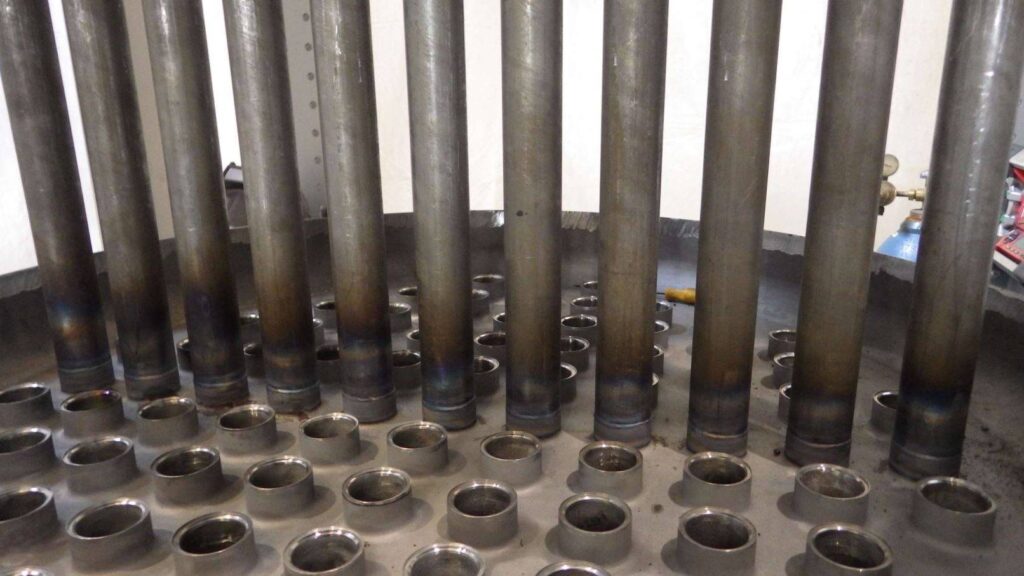
The revised configuration underwent further metallurgical examination and independent laboratory testing. Cross-section analysis confirmed complete fusion, with no cracking or porosity. Measured leak paths ranged from 0.045 to 0.059 inches against a specified minimum of 0.045 inches. Weld lengths ranged from 0.091 to 0.103 inches, exceeding the required minimum of 0.083 inches.
We subsequently completed a 100-hole demonstration block using the revised joint configuration to demonstrate consistent weld quality to the customer.
The outcome reflects the engineering depth we bring to complex fabrication projects. Our welding specialists, design engineers, fabrication personnel, and quality teams worked across disciplines to investigate the interaction between joint geometry, material behavior, equipment, and welding technique. Rather than continuing to compensate for instability through welding parameter adjustments, we developed and tested a revised joint configuration that addressed the manufacturing challenge. For critical equipment, that ability to identify and resolve problems at the design and process level is essential to achieving dependable production quality.
These findings supported a change to the original joint design. Working with the customer, we moved away from the specified fillet/groove configuration in favor of a flush tube-to-tubesheet weld, with the tube end incorporated into the completed weld. This revised geometry, together with changes to tube positioning and tack welding, provided a more consistent approach for the thin-wall stainless-steel application.
Beyond Welding: Engineering Solutions to Complex Manufacturing Challenges
The challenge on this project extended well beyond developing a qualified welding procedure. It required us to question an established joint design, investigate the interaction between materials and manufacturing processes, and demonstrate that a revised approach could meet demanding technical requirements consistently.
Our experience in welding engineering, metallurgy, precision fabrication, and quality assurance allowed us to work through a problem that could not be resolved through conventional process adjustments. That combination of technical expertise and practical manufacturing knowledge is central to how we approach complex fabrication projects. When a specification, design, or manufacturing process presents an unexpected challenge, we have the engineering resources and hands-on experience to investigate it, develop alternatives, and validate the results before proceeding with production.nt would not repeat
FAQ
Yes. Alliance has in-house thermal and mechanical design capabilities, including HTRI thermal design and engineering to applicable ASME, TEMA, API and customer-specific requirements.
Alliance fabricates shell-and-tube heat exchangers, hairpin heat exchangers, licensed Helixchanger® equipment, replacement tube bundles and custom exchanger components.
Yes. Alliance manufactures replacement bundles and exchanger components for existing industrial equipment and can evaluate existing designs when replacement, modification or redesign is required.
Yes. Heat exchanger retubing is part of Alliance’s repair and life-extension capabilities, along with machining, component replacement, weld repair and code alterations.
Alliance has experience with carbon steel, stainless steel, chrome-moly and low-alloy steels, high-nickel and corrosion-resistant alloys, as well as clad and weld-overlay construction.
Yes. Alliance provides 24/7 emergency support for critical equipment failures, including urgent repairs, retubes, replacement bundles, components, machining and expedited fabrication.
Alliance provides inspection and testing capabilities including nondestructive examination, hydrostatic testing, Positive Material Identification and required quality documentation.
Alliance Fabricating operates from a 100,000-square-foot facility in Sarnia, Ontario, serving industrial customers throughout Canada and the United States.